Muse of Arcana • Cartomantic Archaeology & Tang Dynasty Roots
Tang Dynasty Cards: Early Paper Leaves, Woodblock Craft & The Dawn of Card Lore
Long before European playing cards or Renaissance Tarot took form, Tang-era China witnessed the rise of paper craft, woodblock printing, and early sheet/card games—planting seeds that shaped how games and symbolic lots evolved across Eurasia.
When tracing the deepest origins of playing cards and portable symbolic leaves, historians and esoteric researchers alike turn toward imperial China—and specifically to the cultural ferment of the Tang Dynasty (618–907 CE). While the exact 78-card Italian Tarot belongs to fifteenth-century Europe, the Tang era was a decisive turning point in the material history of paper, ink, block-printing, and leisure games.
To look at Tang-era card origins is to step into a world of river-silk pavilions, tea houses, scholarly games, early block-printed sheets, and evolving currencies—where flat, light, illustrated or inscribed slips began replacing heavier bone, ivory, or wooden tiles in everyday play.
Historical Roots: Tang China, Paper Craft & Early Block Printing
The Tang Dynasty was a golden age of cosmopolitan exchange along the Silk Road, artistic refinement, and technological innovation. Paper was already established in China, and during the Tang period, woodblock printing matured into a practical medium capable of reproducing texts, charms, calendars, and patterned sheets.
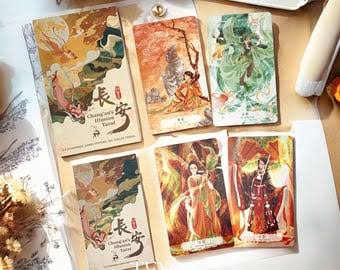
In this environment, flat paper leaves offered a radical advantage over older game pieces: they were light to carry in a sleeve or travel satchel, easy to shuffle or deal, and flexible enough to hold calligraphy, emblems, or game rules.
- Paper & Portability: Unlike bulky board sets or heavy carved pieces, paper leaves made spontaneous games effortless during journeys, banquets, and gatherings.
- Woodblock & Ink Mastery: Advances in carving and printing allowed crisp repeated motifs and characters, setting the technical stage for later card decks in Song and Ming times.
- Banquet & Leisure Culture: Tang court and urban life prized wordplay, drinking games, dice, domino-like tiles, and lot-drawing—creating a fertile culture for structured chance games.
Did you know? Early references from late Tang writers (such as notes associated with Yezi Xi / “leaf games”) point to flat paper leaves used in games and leisure—an early milestone in the story of how card-like sheets entered East Asian pastimes.
How Early Symbols & Leaves Looked Before Later Adaptations
Before later centuries standardized specific deck formats, early Tang-era leaves and game slips looked very different from modern picture cards. Rather than Western crowns, swords, or cups, early Chinese game sheets and related lot traditions drew upon literary culture, administrative ranks, strings of cash coins, and natural/symbolic motifs.
- Inscribed Characters & Literary Motifs: Early leaves often relied on crisp Chinese characters, poetic lines, or rank titles—appealing to a literate culture where calligraphy itself carried beauty and authority.
- Coin & Currency Echoes: Across Chinese game and money traditions—growing especially visible from Tang into Song times—circular coins and strings of cash (guan / wen) became iconic motifs linking trade, counting, and value.
- Drinking & Banquet Lots: Game leaves were closely intertwined with social banquets and forfeit/drinking games, pairing lighthearted chance with wit, poetry, and rank.
- Sacred & Divinatory Slips: Alongside games, printed or written slips and lots had a long parallel presence in temple and esoteric settings, where drawing a slip invited reflection on omen, counsel, and timing.
Symbol Note: Unlike modern playing cards that rely heavily on uniform corner indices and court portraits, early Tang-era leaves lived closer to calligraphy, literary games, and printed charms—showing how “cards” began as versatile sheets of meaning and play.
How the Tradition Evolved Across China & Reached the West
Ideas and objects rarely move in a single straight line; they travel in waves across generations and trade networks. Within China, early paper leaves and game traditions evolved through the Song, Yuan, and Ming dynasties, giving rise to classic money-suited cards and rich multi-suited decks.
Beyond China’s borders, the Silk Road and maritime trade routes carried paper-making, block printing, and card-game concepts across Central Asia, the Islamic world, and eventually the Mediterranean:
- Transmission of Paper & Printing: Paper-making spread westward over centuries, making lightweight card manufacture possible far beyond its Chinese origins.
- Regional Reinvention: As card games crossed into the Islamic world—seen vividly in Mamluk Egypt—artisans reshaped suits and court ranks to fit their own aesthetic and social world (such as coins, cups, swords, and polo sticks).
- Arrival in Europe: By the late fourteenth century, four-suit decks reached Europe via Mediterranean trade, later expanding in fifteenth-century Italy into triumph decks (trionfi) and Tarocchi.
The Transition From Tang Leaves to Later Chinese & Global Decks
Understanding the Tang era clarifies an important distinction in card history: Tang-era leaves represent the early dawn of flat paper game sheets, while later Chinese decks (such as money-suited cards in subsequent dynasties) and much later modern “Chinese Tarot” decks represent subsequent chapters of evolution and creative reinterpretation.
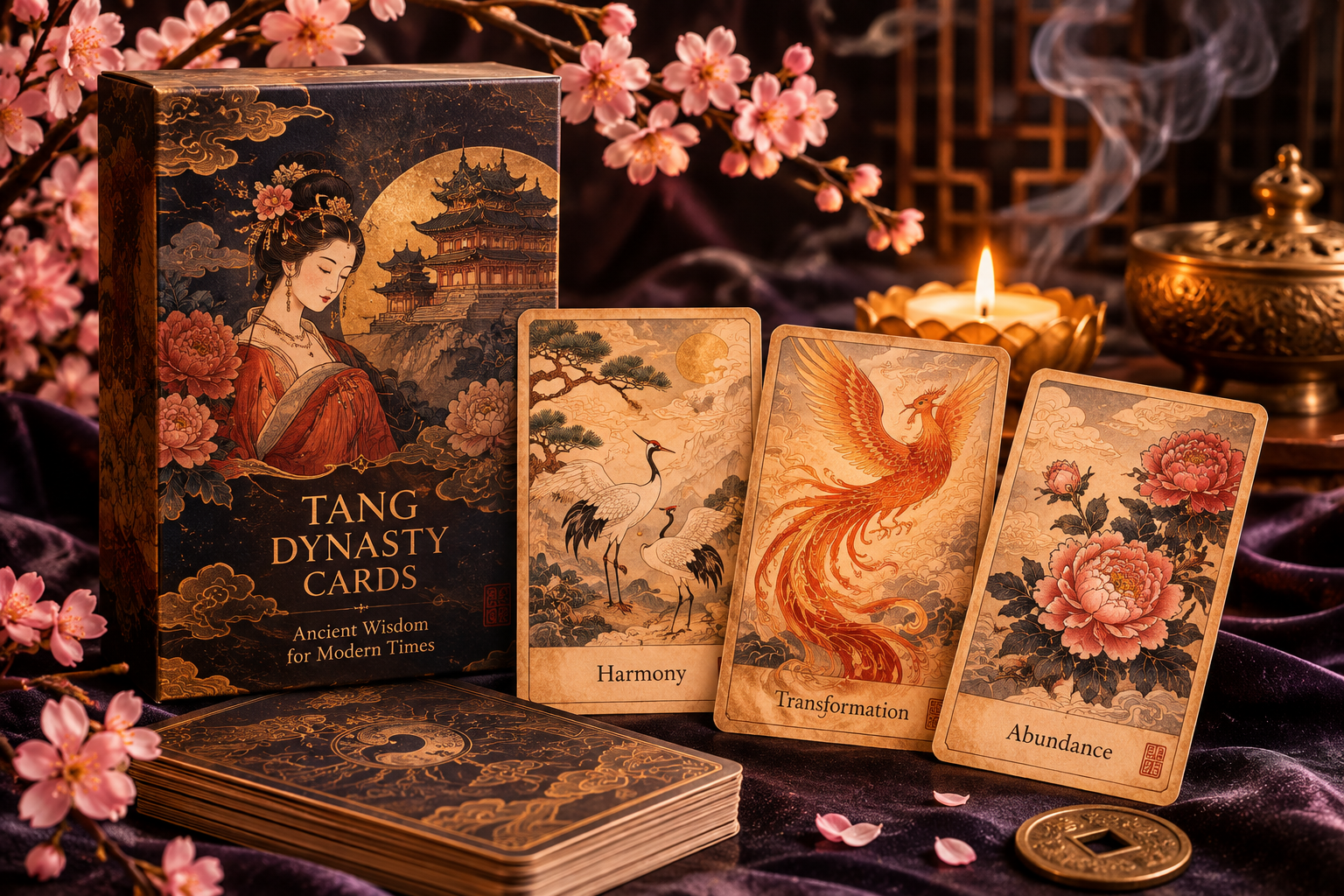
- From Single Leaves to Structured Suits: Over time, casual game leaves and lot slips matured into organized sets with clear hierarchies, values, and suit dynamics.
- From Play to Esoteric Reflection: Whenever humans handle drawn slips or cards in quiet contemplation, chance becomes a mirror for human choice, timing, and inner state.
Comparative Overview: Tang Leaves vs. Mamluk Cards vs. Early Italian Tarot
Placing these three milestones side by side makes it easier to see how paper leaves, suit structures, and symbolic imagery evolved across time and geography without flattening their distinct identities:
| Feature | Tang-Era Leaves (China) | Mamluk Cards (Egypt) | Early Italian Tarot (Renaissance) |
|---|---|---|---|
| Era & Setting | Tang Dynasty (618–907 CE); paper, woodblock craft, banquets & literary leisure. | Mamluk Sultanate (c. 13th–early 16th c.); laminated paper, courtly & urban games. | 15th-century Northern Italy; noble courts, trick-taking games (trionfi). |
| Visual & Symbolic Language | Characters, literary/rank motifs, banquet/lot traditions, early paper-leaf formats. | Arabesques, medallions, calligraphy, rhyming verse; four suits (coins, cups, swords, polo sticks). | Four suits (coins, cups, swords, batons) plus illustrated allegorical triumph cards. |
| Role in Card & Tarot History | Early paper-leaf and woodblock foundation preceding later East Asian & Eurasian card growth. | Key four-suit Islamic deck tradition reaching Southern Europe via Mediterranean trade. | Direct ancestor of Tarot decks—combining four-suit play with triumph trumps. |
Arcane Perspective: From Tang paper leaves to Mamluk medallions and European Tarot, the thread that endures is unmistakably human: taking a small, quiet slip of paper in the hand and asking it to hold a mirror up to fate, wit, and meaning.
Why Tang Card History Still Matters in Esoteric Lore
For practitioners of Tarot, divination, and symbolic psychology, looking back to the Tang Dynasty offers grounding perspective. It reminds us that every deck we hold today stands at the end of a long chain of craft, migration, and reinvention.
Whether you read with classic European arcana, explore Mamluk history, or work with modern decks inspired by Eastern philosophy, the deeper magic lies in your own attentiveness—turning ink, paper, and symbol into a space for clarity and insight.