Muse of Arcana • History of Tarot
The First Tarot Decks in the World: Renaissance Origins & Courtly Games
How fifteenth-century Italian triumph cards began as refined parlor games before evolving into modern esoteric Tarot.
Long before Tarot became a tool for meditation, storytelling, and symbolic reflection, the earliest surviving Tarot decks emerged in fifteenth-century Northern Italy. At the time, they were known as carte da trionfi (“triumph cards”) and later tarocchi—luxury illustrated card decks used for trick-taking games in noble courts.
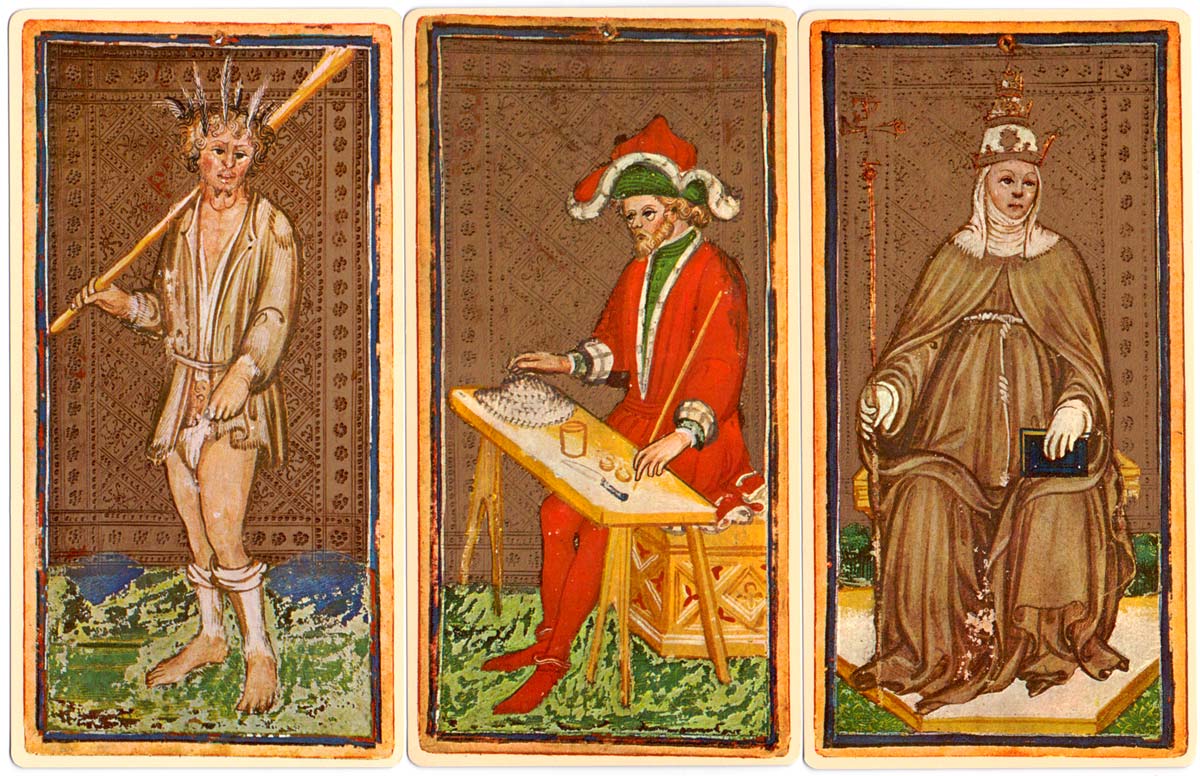
Early Italian Decks: Visconti-Sforza & Court Commissions
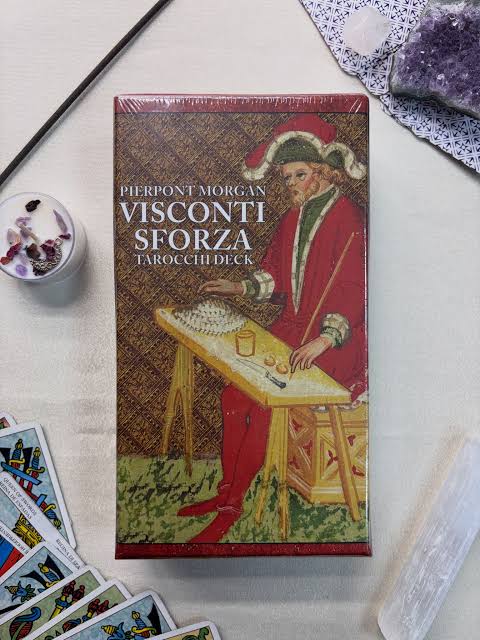
The oldest surviving Tarot cards are associated with the Visconti-Sforza families in Milan and nearby courts around the 1440s–1450s. Hand-painted with tempera and gold leaf, these cards were status objects and family heirlooms rather than mass-printed decks.
- Game Structure First: A standard Tarot deck combined four suited ranks (coins, cups, swords, batons/wands) with a set of illustrated “triumph” cards that acted as trump cards during play.
- Renaissance Allegory: Early triumph imagery drew on civic pageants, virtues, celestial figures, and familiar medieval/Renaissance allegories rather than a single unified occult system.
- From Cards to Esotericism: It was only centuries later—especially in the late eighteenth and nineteenth centuries—that writers began linking Tarot imagery systematically to ancient lore, Kabbalah, and symbolic initiation.
Did you know? Surviving Visconti-Sforza decks are incomplete—some cards were lost over five centuries, and a few were even recreated artistically later on. Because they were painted by hand, no two early luxury decks were identical.
Why Early Tarot Matters Today
Knowing Tarot’s origins as a structured game of trumps, suits, and perspective keeps our practice grounded. Every card sits within a larger system of tension, timing, and context—meaning a single card always interacts with the surrounding spread and the real question you bring to it.