Muse of Arcana • Depth & Esoteric Psychology
Jungian Psychology and Tarot: Archetypes, Symbolism, Shadow Work & Personal Growth
Exploring how Carl Jung’s analytical psychology illuminates Tarot symbolism, recurring life patterns, and deliberate self-development.
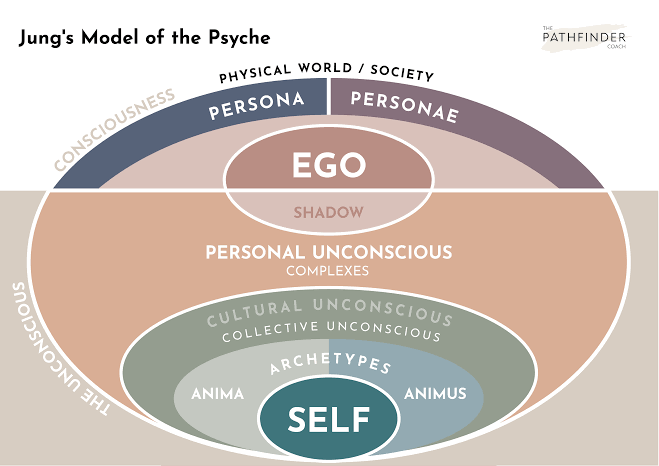
Carl Gustav Jung approached the human psyche not as a mechanical box of symptoms, but as a living landscape layered with conscious awareness, personal memory, and deeper symbolic currents. In Jungian thought, the collective unconscious holds universal patterns of human experience—structures that surface in dreams, myths, art, and reflective symbolic systems such as the Tarot.
Archetypes: The Universal Blueprints Within
Archetypes are inherited psychological motifs and emotional templates—such as the Hero, the Sage, the Caregiver, the Trickster, the Lover, and the Ruler. You never see an archetype directly in its raw form; instead, you recognize it through recurring roles, impulses, and emotional reactions in your own life.
- The Persona: The social mask you wear to navigate expectations, workplaces, and polite society—useful for adaptation, yet limiting if you mistake the mask for your whole self.
- The Shadow: The disowned, repressed, or unexamined traits—both dark impulses and hidden strengths—that often get projected onto other people until you claim them consciously.
- The Self: The organizing center of the psyche that pulls conscious ego and unconscious depths toward wholeness and integration, a process Jung called individuation.
The Connection Between Tarot and Jungian Symbolism
Tarot works so naturally alongside Jungian psychology because its imagery speaks the language of symbolism rather than rigid literalism. A symbol points beyond what is immediately visible, holding tension between opposites and inviting reflection rather than handing down fatalistic decrees.
The Major Arcana mirrors major developmental thresholds and archetypal passages—starting a journey with The Fool, structuring will and craft with The Magician, confronting inner illusions with The Moon, or breaking rigid structures with The Tower. The Minor Arcana and court figures zoom in on everyday emotional currents, relational dynamics, mental habits, and practical work.
Did you know? Jung famously explored synchronicity—meaningful coincidences where an inner psychological state aligns with an outer event without a simple cause-and-effect chain. When a Tarot card lands at a charged moment, its real value lies in the mirror it holds up to your current mindset and blind spots.
How It Supports Personal Development
Using archetypes and Tarot as a reflective tool turns vague emotional friction into clear questions. Instead of asking, “What is going to happen to me?” a more constructive question is, “Which inner pattern is asking for my attention right now, and how can I respond with maturity?”
- Spotting Repetitive Loops: Naming an archetype helps you notice when you are over-functioning, avoiding conflict, or chasing validation out of habit.
- Integrating the Shadow: What irritates or fascinates you intensely in others often points to an unintegrated part of your own psyche waiting to be understood rather than judged.
- Moving Toward Individuation: Self-development isn’t about becoming flawless; it’s about becoming conscious, owning your boundaries, and aligning actions with your real values.
From My Perspective: I treat Tarot and Jungian symbolism with analytical clarity rather than blind superstition. Cards don’t replace critical thinking, accountability, or real-world choices—they act like a sharp diagnostic lens that helps you step back from emotional noise, see the pattern you’re standing inside, and decide deliberately what you want to build next.