The Muse Lunar Guide: Decoding the Rhythm of the Moon
Track the live lunar cycle, align your rituals, and explore the intersection of astronomy, Jungian psychology, and ancient mythology.
Whether you are lighting a candle for a specific intention or simply tracking why your energy shifts from week to week, the Moon acts as a cosmic metronome. Every 29.53 days, the Moon completes its synodic cycle—moving from total darkness to blinding illumination and back again.
Did you know? The Moon doesn’t actually change shape, nor is it covered by Earth’s shadow during its monthly phases (that only happens during a lunar eclipse). Instead, lunar phases are purely a matter of perspective: we are simply viewing different angles of the Moon’s sunlit half as it orbits the Earth.
The Eight Phases of the Lunar Cycle
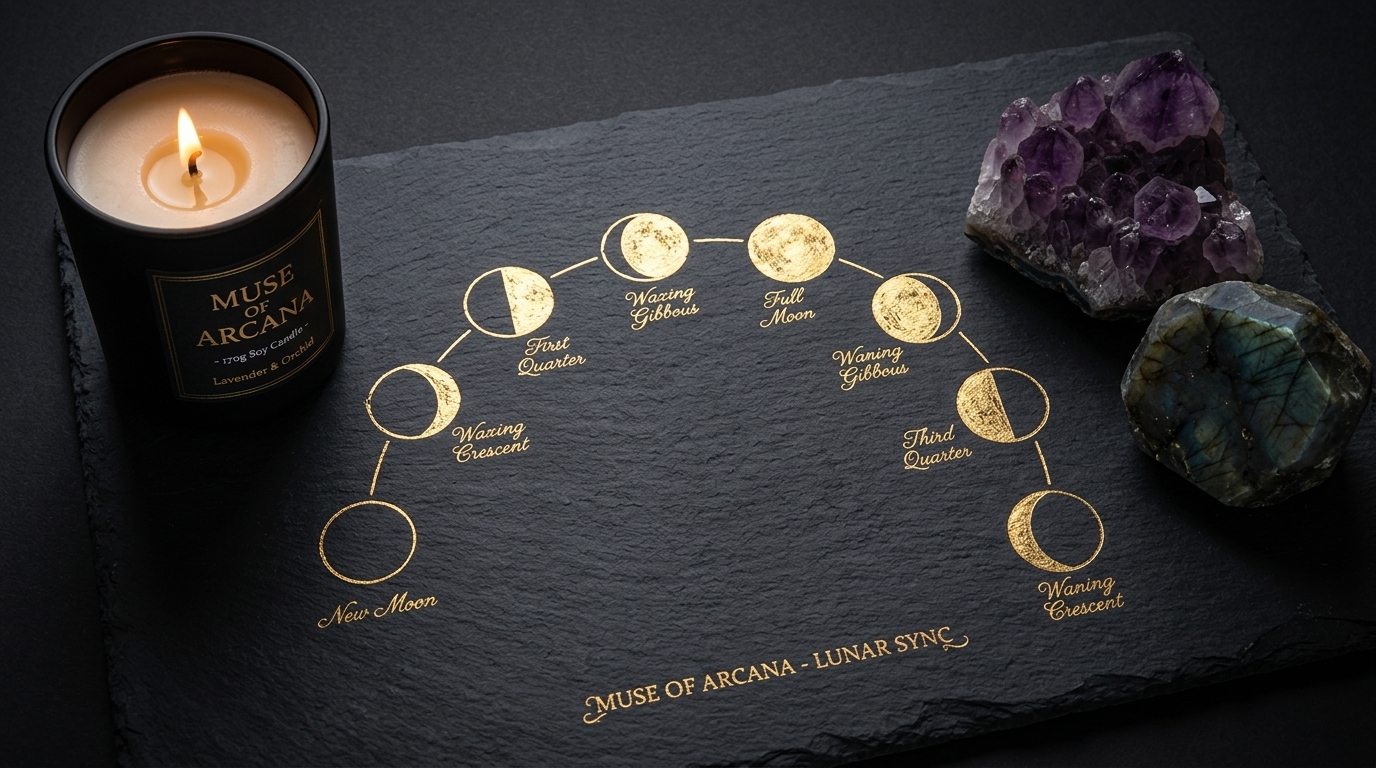
- New Moon (0% Illumination): The Sun and Moon align in the same part of the sky. The side facing Earth is shrouded in shadow, creating a blank slate for quiet introspection, rest, and planting seeds of intention.
- Waxing Crescent: A silver sliver appears in the evening sky. Momentum begins to build—this is the stage for gathering resources, outlining plans, and taking your first deliberate steps.
- First Quarter: Half the Moon is illuminated. Often a moment of creative friction, this phase asks you to make decisive choices, push past hesitation, and defend your boundaries.
- Waxing Gibbous: Light expands past the halfway mark. Energy is focused on refining, editing, and pouring sustained attention into your work before the peak.
- Full Moon (100% Illumination): The Sun and Moon sit in direct opposition. Everything hidden comes into sharp focus, bringing emotional culmination, heightened intuition, and clarity.
- Waning Gibbous: The light begins to recede. A phase dedicated to gratitude, integrating lessons learned, and sharing wisdom with others.
- Last Quarter: Half-lit once again, signaling a turning point. It is time to release outdated habits, clear energetic clutter, and let go of what no longer serves your path.
- Waning Crescent: The final surrender before renewal. Energy drops inward, favoring deep recovery, solitude, and nervous system restoration.
How the Moon Influences Us: Four Lenses
1. The Astrological Perspective
In astrology, the Sun represents your conscious identity and outward purpose, while the Moon governs your emotional landscape, instincts, subconscious habits, and need for safety. While the lunar phase sets the overarching energetic tempo (building vs. releasing), the zodiac sign the Moon is transiting colors the emotional mood of the day. Working with the lunar cycle means aligning your practical actions with these natural tides rather than forcing peak output during a Waning Crescent.
2. The Esoteric & Ritual Perspective
In esoteric traditions and candle magic, light and shadow are tools for focus. Waxing phases amplify magnetic, constructive intentions—drawing in abundance, clarity, or momentum. Waning phases support banishing, cord-cutting, and clearing stagnant energy from your space. Pairing a specific botanical fragrance with the flicker of a soy wax flame acts as a sensory anchor, signaling to your mind that you are stepping out of daily noise and into intentional presence.
Did you know? The word “lunatic” and “lunacy” originate from the Latin word luna (Moon). Ancient Roman and medieval scholars believed that the Full Moon’s pull on water in the human body could amplify emotional intensity and restless sleep.
3. The Jungian Psychology Lens
Through the framework of Carl Jung’s analytical psychology, the Moon is an archetype of the unconscious mind, the anima, and the Shadow. Just as the Moon reflects the Sun’s light in the dark sky, our emotional reactions reflect unconscious patterns waiting to be integrated.
- The Dark/New Moon invites you into the quiet depths of the psyche before ideas take conscious form.
- The Full Moon illuminates the Shadow—projecting repressed feelings, unspoken desires, or defensive triggers into your awareness so you can examine them objectively rather than acting them out blindly.
4. Global & Chinese Mythology
Across civilizations, the Moon has been revered as a weaver of time, fertility, and destiny:
- Greco-Roman & Norse Lore: In ancient Greece, Selene drove her silver moon chariot across the night sky, while Artemis embodied the wild, untamed intuition of the wilderness. In Norse myth, Máni guided the Moon through the heavens, perpetually chased by the wolf Hati—an enduring symbol of time’s relentless rhythm.
- Chinese Mythology & The Jade Rabbit: In Chinese lore, the Moon Palace is home to Chang’e, the Moon Goddess, and her faithful companion, the Jade Rabbit (Yutu), who endlessly pounds medicinal herbs and the elixir of immortality with a mortar and pestle. Alongside them stands Wu Gang, eternally chopping a self-healing osmanthus tree—a poignant metaphor for cyclical effort and resilience. Every year during the Mid-Autumn Festival (celebrated on the 15th day of the 8th lunar month under the brightest Full Moon), families gather to share mooncakes, light lanterns, and honor harmony and gratitude.
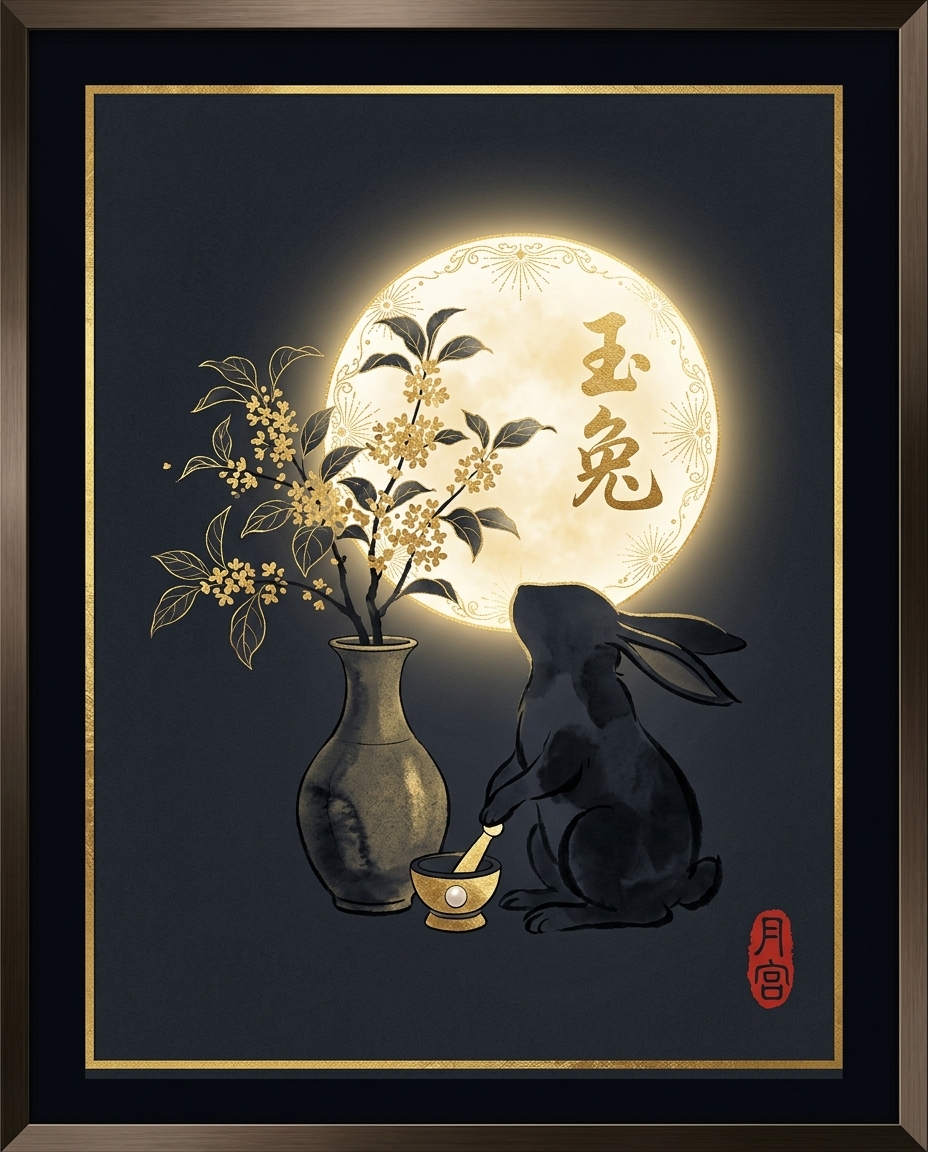
Did you know? In Chinese tradition, the patterns of craters and dark volcanic plains (maria) on the surface of the Full Moon aren’t seen as a “Man in the Moon,” but rather as the silhouette of the Jade Rabbit standing beside a cassia tree.
The Moon, Medicine & The Menstrual Cycle
Because the average lunar cycle (29.53 days) mirrors the average human menstrual cycle (~28 to 29 days), ancient cultures naturally linked the two—even deriving the word menstruation from the Latin mensis (month) and Greek mene (moon).
- What Medical Science Says: Biologically, the menstrual cycle is regulated by the hypothalamic-pituitary-ovarian (HPO) axis and shifting levels of estrogen, progesterone, LH, and FSH—not by lunar gravity. Large-scale clinical studies show that women do not universally ovulate or bleed on the exact same lunar phase; cycle lengths naturally vary between 21 and 35 days depending on genetics, stress, sleep, and metabolic health.
- Why the Metaphor Still Works: Even without strict astronomical synchronization, mapping your internal hormonal seasons onto the lunar phases is a powerful self-awareness tool. Many people find it helpful to compare menstruation to the restorative quiet of the New Moon, the follicular phase to the rising energy of the Waxing Moon, ovulation to the outward radiance of the Full Moon, and the luteal phase to the reflective discernment of the Waning Moon.
Lunar Traditions & Cleansing Your Crystals
Ancient & Modern Lunar Traditions
- Naming the Full Moons: Indigenous and agrarian cultures named each monthly Full Moon after seasonal shifts—such as the Wolf Moon in January, the Harvest Moon in autumn, or the Cold Moon in December—using the lunar calendar to time planting, harvesting, and community gatherings.
- Threshold Cleansing: Sweeping the home, airing out rooms, and journaling release lists during the Last Quarter or Waning Moon remains a widespread practice for resetting personal space before a new cycle begins.
How to Cleanse & Charge Crystals Under the Moon
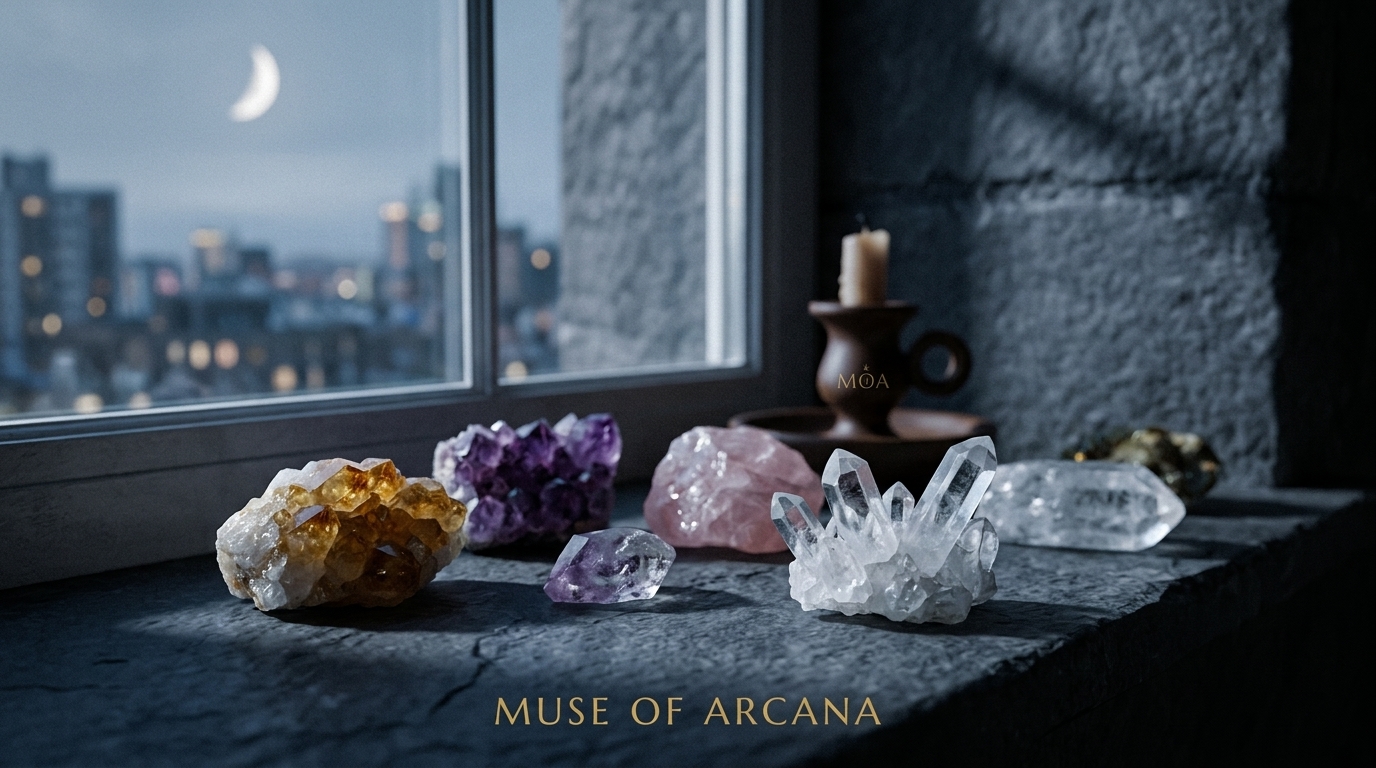
Moonlight—especially during the Full Moon or Waning Gibbous phase—is the safest, gentlest method for energetically resetting your crystals without risking sun-fading or water damage.
- Physical Dusting First: Gently wipe your stones with a soft, dry microfiber cloth. Avoid water entirely for porous, soft, or metallic crystals like Selenite, Malachite, Pyrite, Calcite, or Lepidolite, as water can dissolve or damage their surface.
- Choose Your Placement: Place your crystals on a windowsill, balcony, or outdoor table overnight. Even if the sky is cloudy or the moonlight is indirect, the subtle lunar energy and your intentional pause still do the work.
- Avoid Harsh Sunlight for Colored Stones: Stones like Amethyst, Rose Quartz, Citrine, and Fluorite can fade if left in direct morning sunlight after a moon bath—bring them inside shortly after dawn.
- Set Your Intention: Hold your cleansed crystals in your palms for a few quiet breaths, visualizing stagnant energy clearing away, and state a clear, grounded intention for the cycle ahead.